How Conduit Works
A context mesh that queries data where it lives, routes expertise intelligently, and builds organizational knowledge. No data lakes, no ETL pipelines—just intelligent query routing.
Architecture
Context Mesh Architecture
Two planes work together: a Query Plane for historical and analytical queries, and a Real-Time Plane for live tag values and push subscriptions. Translators connect to both.
CONTROL PLANE
PortalReact UI
React 18 + TypeScript. Query interface, UNS browser, data explorer.
API GatewayREST + Auth
Fastify REST API. JWT auth, RBAC, rate limiting.
Query PlannerDAG Engine
DAG-based execution planner. Partial results, Redis caching.
UNS ResolverNamespace
Dynamic namespace resolution. Tag proposals, source bindings.
Context StorePG + DuckDB
PostgreSQL + pgvector + DuckDB. Multi-source correlation.
Mesh RegistryTopology
Manages translator instances, federation links, and tool aggregation.
Query PlaneMCP / HTTP
NQE queries
Tool calls
Bulk history
Real-Time PlaneNATS
Live tag values
Subscriptions
Push alerts
TRANSLATORS
Translator
Splunk●
SPL CompilerProduction
Translator
MQTT●
mqtt.js v5Production
Translator
OPC-UA●
node-opcuaProduction
From Question to Answer
Five steps from natural language query to collaborative intelligence.
01
Connect Your Sources
Deploy translators near your data sources. Each translator runs as a lightweight container, connecting to your analytics platforms, IoT brokers, and industrial protocols. They auto-register with Conduit and begin streaming live values immediately.
- Production translators for Splunk, MQTT, OPC-UA, MCP IoT Gateway
- Translators auto-register with Conduit on startup
- Real-time values stream via NATS — sub-millisecond delivery
- Minimal footprint — runs on edge hardware

02
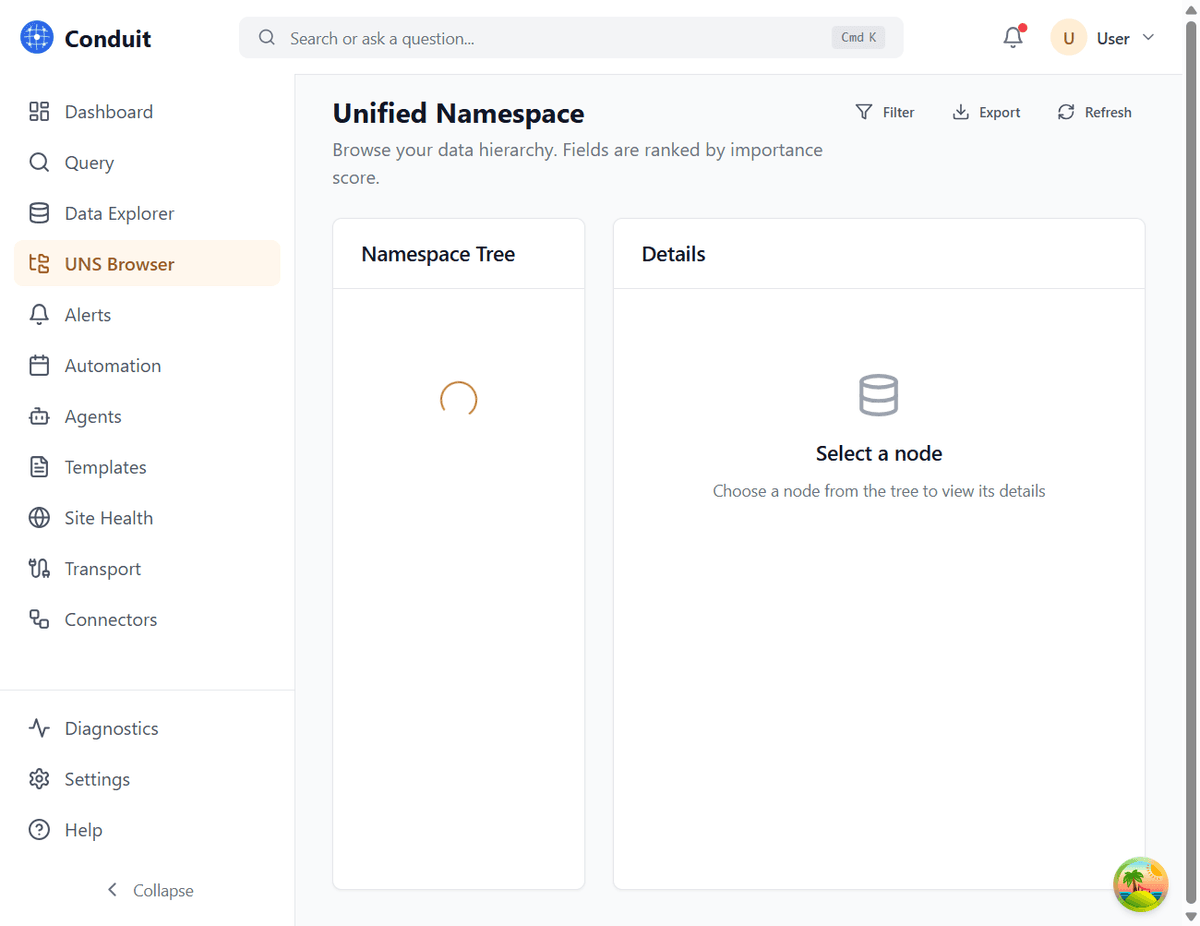
Discover & Contextualize
Conduit's Context Engine and 5-stage discovery pipeline profiles your data sources, analyzes field co-occurrence, and builds a unified catalog with semantic context.
- Automatic tag discovery with field profiling
- Hybrid BM25 + semantic search with pgvector
- Dynamic UNS built from usage patterns
- Co-occurrence analysis for relationship mapping
03
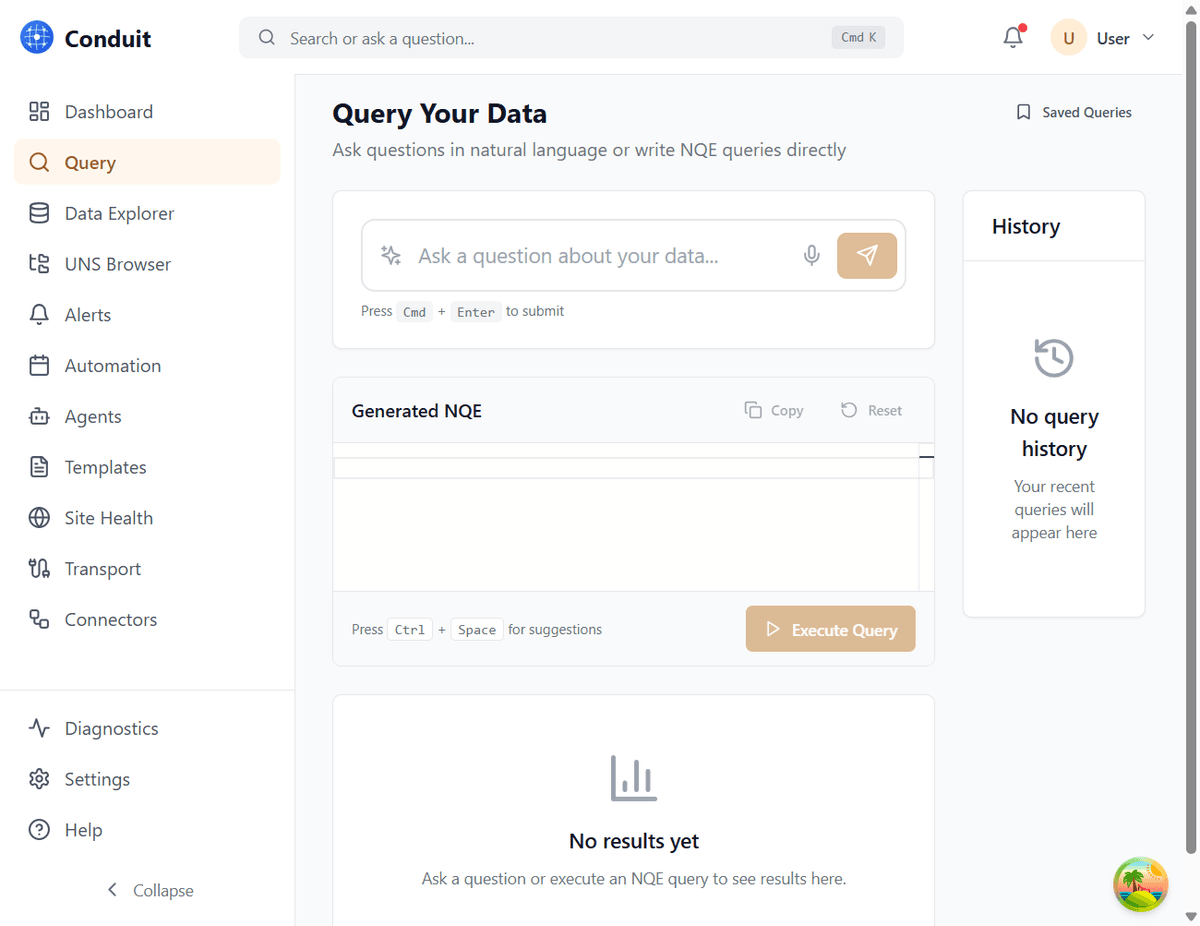
Query in Natural Language
Ask questions naturally. Multi-LLM AI interprets your intent using Golden Templates and organizational context, generating queries you review before execution.
- Multi-provider LLM (Claude, OpenAI, Azure, Ollama)
- Golden Templates with auto-promotion from correction patterns
- Organizational context filtering by department/role
- Confidence scoring drives correction-to-template pipeline
04
Get Unified Results
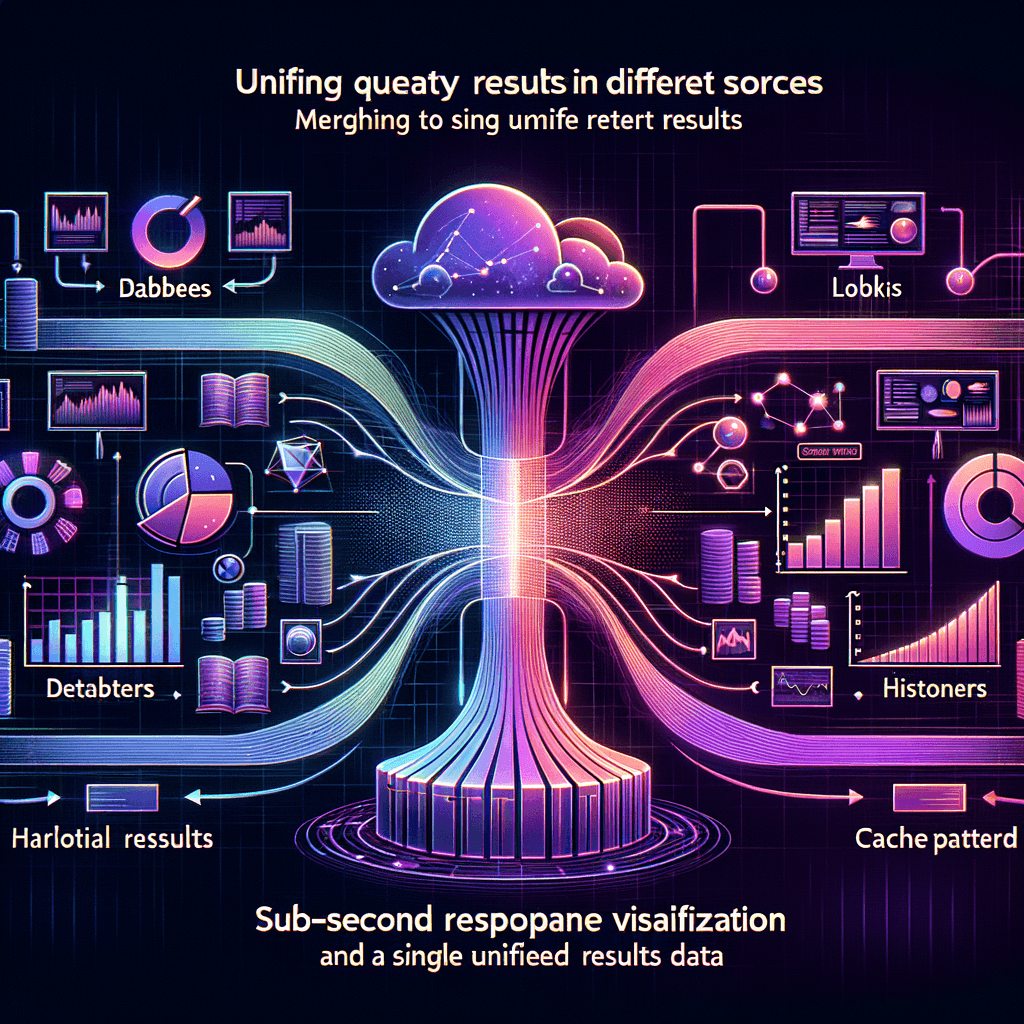
The query planner builds a DAG across all relevant sources, executes nodes in parallel, and returns correlated results. Partial execution returns available data immediately while slower sources complete.
- DAG-based query planner routes to Splunk, MQTT, and OPC-UA in parallel
- Partial execution returns results as sources respond
- Live tag subscriptions deliver values in under 2ms — no polling
- Redis-backed query plan caching for instant repeat queries
05
Route & Collaborate
When deeper expertise is needed, AI routing intelligence finds the right expert — not through rigid org charts, but by learning who actually resolves what. It skips unnecessary layers, discovers hidden expertise, and pulls data from Conduit simultaneously.
- AI learns routing patterns from real interactions — no configuration
- Skip-level routing eliminates unnecessary management hops
- Exploration routing discovers hidden expertise across teams
- Parallel data queries + expert routing = complete answers faster
Watch a Query Flow
From natural language to results in under a second.
0
Natural Language
"What stopped in the last hour?"
1
NQE Generation
AGGREGATE stoppage BY area DURING last_1h
2
UNS Resolution
enterprise/chicago/area_*/stoppages
3
Query Plan (DAG)
Splunk → SPL: index=ot stoppage=true | stats count by area
4
Results
3 stoppages found across 2 areas (0.8s)
Ready to see it in action?
Get a personalized demo of Conduit's context mesh in action with your data sources.